When you hear the word Cotswold, a distinct image likely comes to mind. The name comes from the word "cot," meaning a sheep enclosure, and "wold," meaning rolling hillsides. The word has an easy-on-the-tongue mouthfeel when you say it, and if you know this magical place, images of soft green pastures are immediately conjured up in your imagination.
The Cotswolds are a rural region in south-west and south-central England. It is known, as its name suggests, for its rolling hills, dramatic escarpments, gray boulders, and honey-colored limestone—materials resplendent in the buildings that seem to melt right into the landscape.
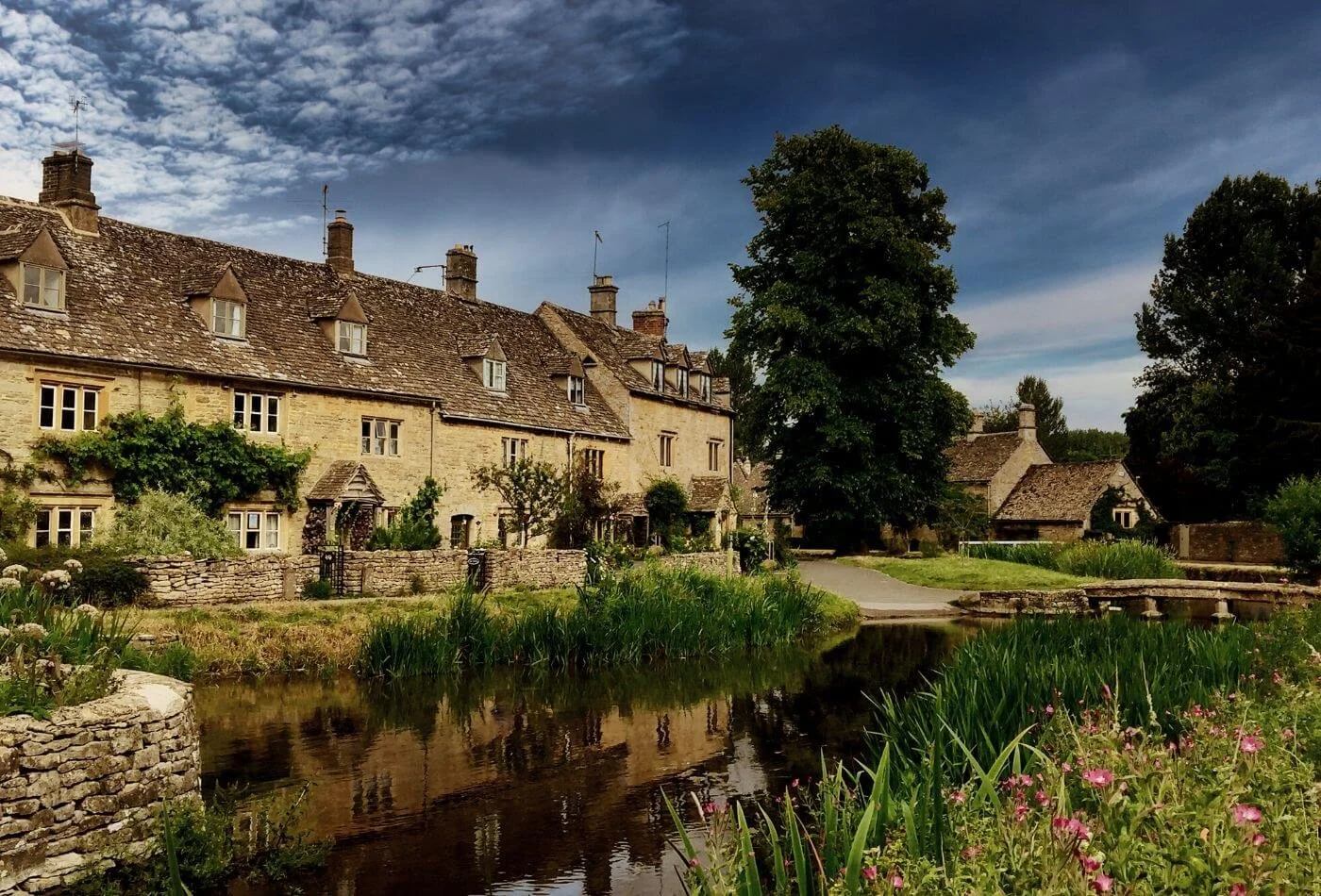
The region covers parts of Gloucestershire, Oxfordshire, Warwickshire, Wiltshire, Worcestershire, and Somerset, featuring towns with names that certainly belong in a fairytale, do they not? The area is verdant and has been home to sheep and farms for as long as stories have been told. The architecture grew out of this agrarian history, defined by the simple form of a small rectangular mass with a steep gable roof and highlighted by dormers of all sizes. Structures are built mostly of local stone characterized by Jurassic oolitic limestone—also known as Cotswold stone—which gives the region's cottages, manor houses, and dry-stone walls their signature golden glow.
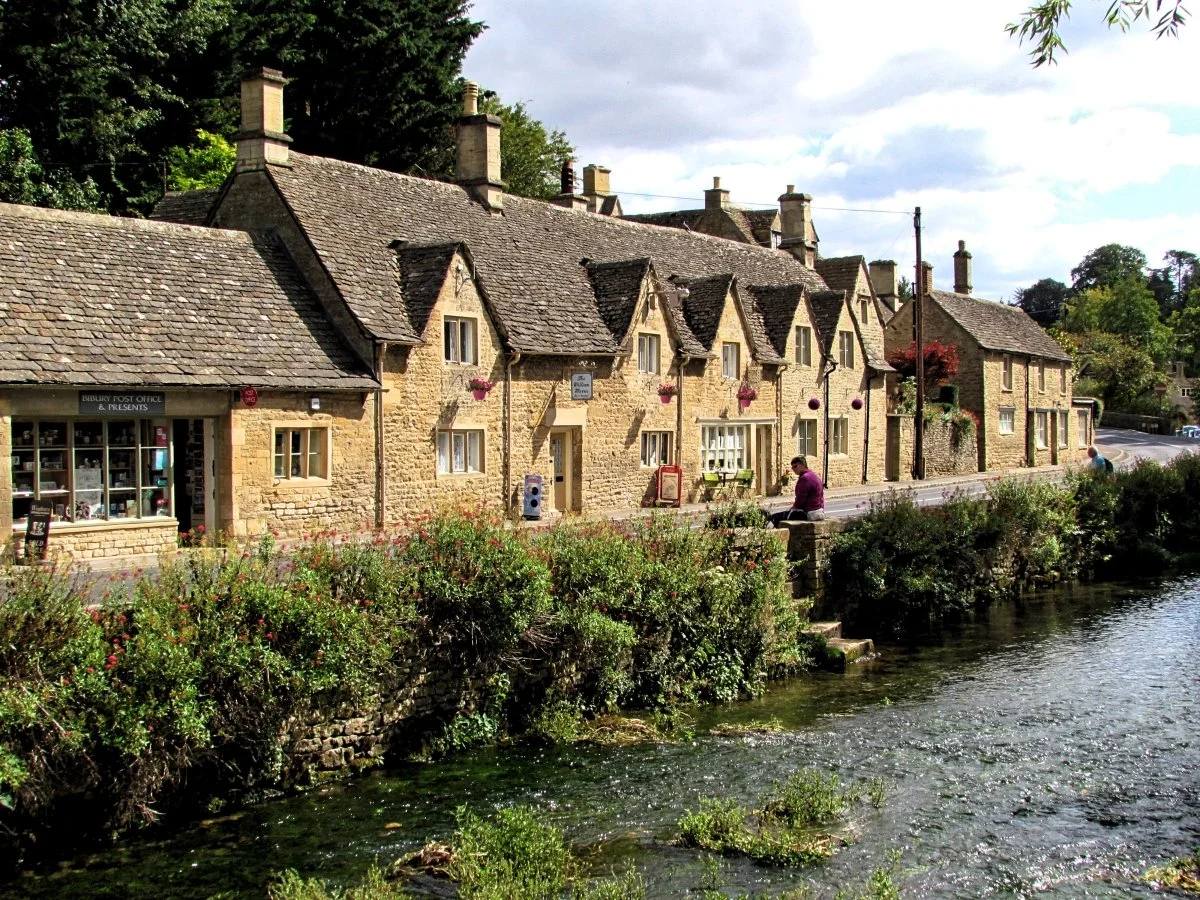
Medieval wealth built upon the famous Cotswold Lion sheep funded grand "wool churches" and prosperous market towns. As these towns grew, the architecture evolved into a prevailing style of building. To keep warm in the damp winters, windows were small with delicate leaded glass panes. To allow for the greatest amount of light, the jambs and sills were angled to let sunshine seep into the rooms from the steep lay of the sun. Because glass was expensive, small panes were ganged together as more glass was purchased to add to the windows over time. Roofs were finished in stone tile, clay, or thatch, and these materials blended into the color of the stone along with the moss, lichen, and fungus that added to the patina and charm of the buildings.
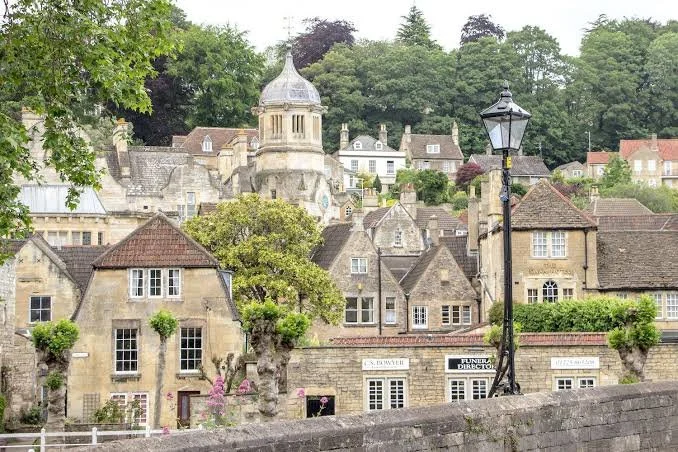
Over centuries, these modest cottages and grand manors became inseparable from the wild English gardens surrounding them. Stone walls draped in climbing roses, lavender, and ancient ivy soften the sturdy edges of the limestone. In the warmer months, window boxes burst with color against the warm golden facades, while narrow lanes wind past bubbling streams and centuries-old stone bridges. Today, the Cotswolds remain an Area of Outstanding Natural Beauty, fiercely protected to preserve this timeless harmony between nature and craft. Walking through these quiet villages feels like stepping into a living storybook, where every weathered stone carries the memory of the shepherds, masons, and weavers who shaped the land.
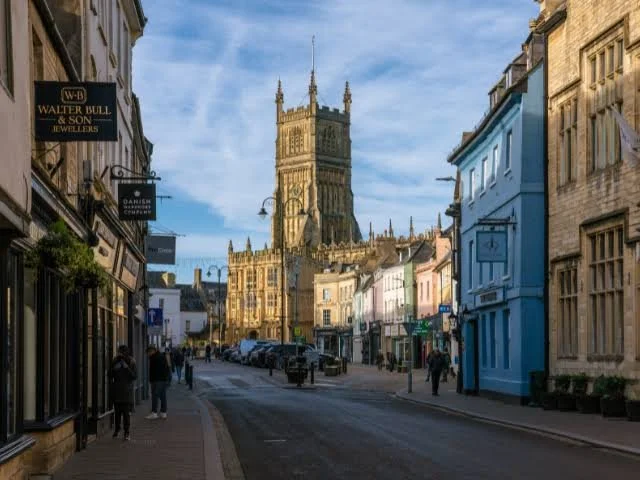
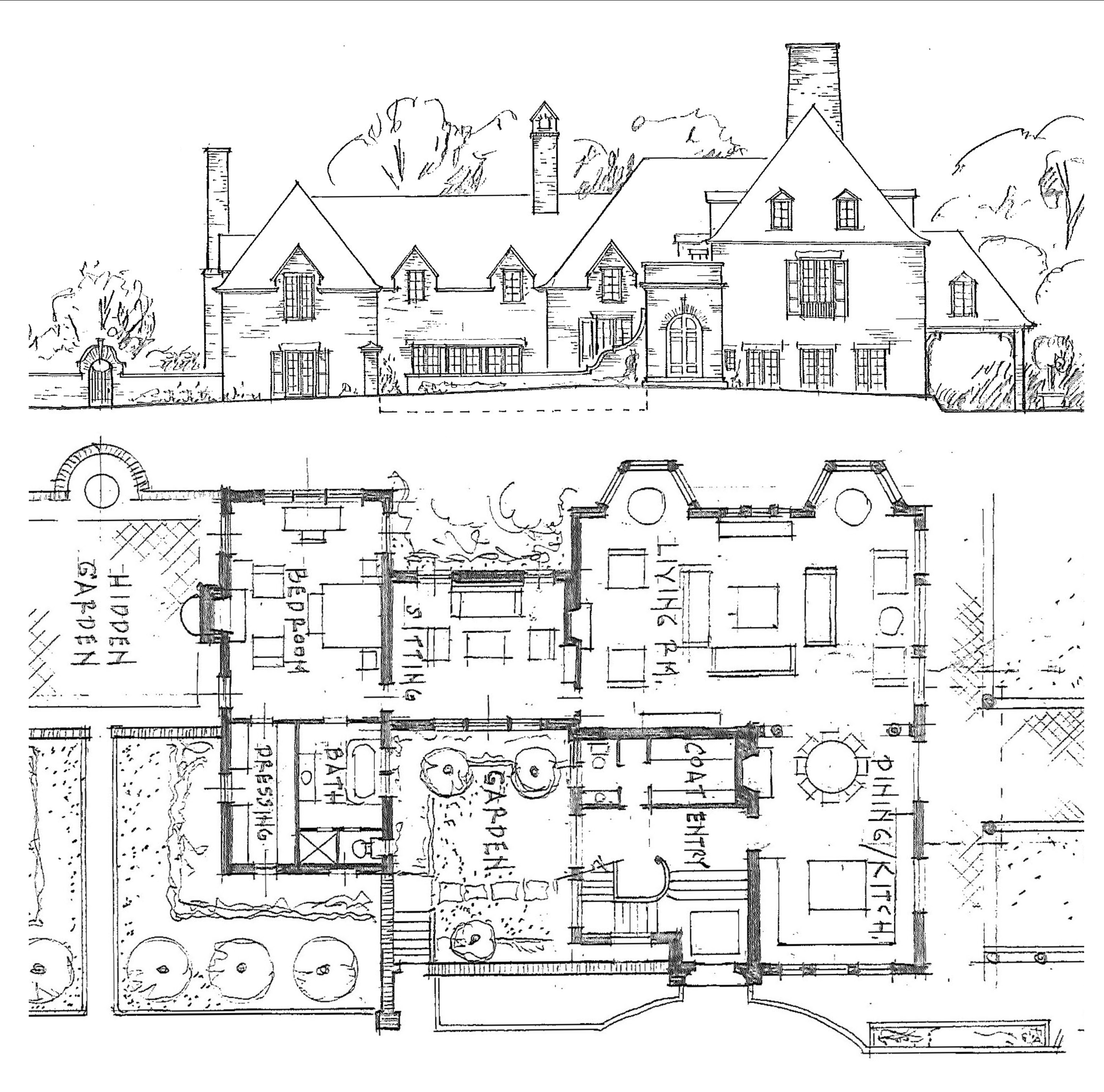
Some of the most picturesque historic hubs—like Cirencester, often called the capital of the Cotswolds, and villages like Bibury, Bourton-on-the-Water, and Castle Combe—truly look like a stage set for a romance movie. Once you have spent time in these towns, the architecture is emblazoned into your mind. As an architect, it is a style that flows so easily off the tip of the pencil that it is sometimes difficult to think of any other style of home one would want. As wealthier merchants and nobility sought a home or relaxing escape in this paradise, more elaborate forms of the Cotswold style became prevalent. In these larger homes, the same simple form and modest fenestration are repeated, arranged into larger conglomerations to create a pleasing whole. The mass of the house roams, rises, and falls to punctuate "entry," "privacy," or "celebration." See the example here of a home I designed near the water in Southampton, NY in this wonderful style. The house uses these simple forms, stone exterior, and repeating casement windows with small leaded glass to connect to the style of central, rural England. It is full of whimsy and uses its garden spaces to blur the line between inside and outside—an homage to the rural life among the rolling hills and grazing sheep of a quieter, medieval time.