Travel is so important to help foster ideas. I remember being an architecture student and learning how so many of the great designers and artists from history made the effort to embark on a "grand tour". I also remember how naive I was as an early student—I did not see the value of travel and how it would make you a better architect. My thought was that you could learn from your professors and from books, but what would travel actually do beyond what you could see on paper?
Fortunately, my mind was pliable enough to stay open to the idea that travel had value. I was still focused on my architecture history classes to learn about style and the culture of construction among the many peoples of the world. I was fascinated by the change in building form based on what was readily available nearby. In areas with forests, wooden structures took form: soaring roof structures with impossibly complicated truss systems, ornamented at the juncture between branches and beams, and carved with delicate details.
To help me remember buildings in my architecture history classes, I would draw each building on a postcard with all the information on the back to study for tests. There were buildings that called to me to come see them, so I started to make pilgrimages to visit them: St. John the Divine, the Morgan Library, the Boston Public Library, San Francisco City Hall, the Rodin Museum in Philadelphia, and many more. Each time I saw a new building, I learned something new. The buildings would be larger or smaller than expected, the details more elaborate or cut deeper, and the colors more brilliant in the sun. I learned the value of travel and experience. I also learned the value of memory, as these experiences burned ideas into my head.
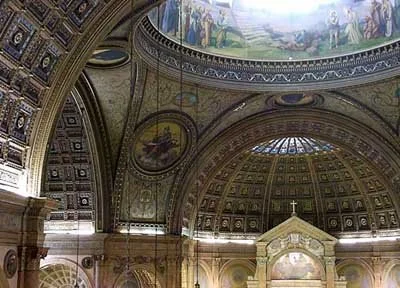
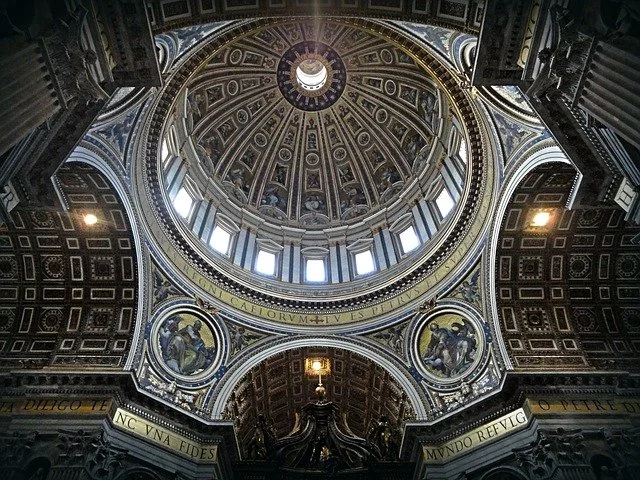
My architecture education led me to a year in Rome. It was transformative—more than I could have ever imagined. I saw the works of Michelangelo, Bramante, Borromini, Sangallo, Canaletto, and Bernini. Among the new details that I was accumulating in my repertoire were the rising pendentives at the nave crossing of a Renaissance church. The motif left an indelible impression. I decided that when an opportunity presented itself, I would recreate such a space. I felt grateful that my mind had been trained and was apt to offer solutions from its available library.
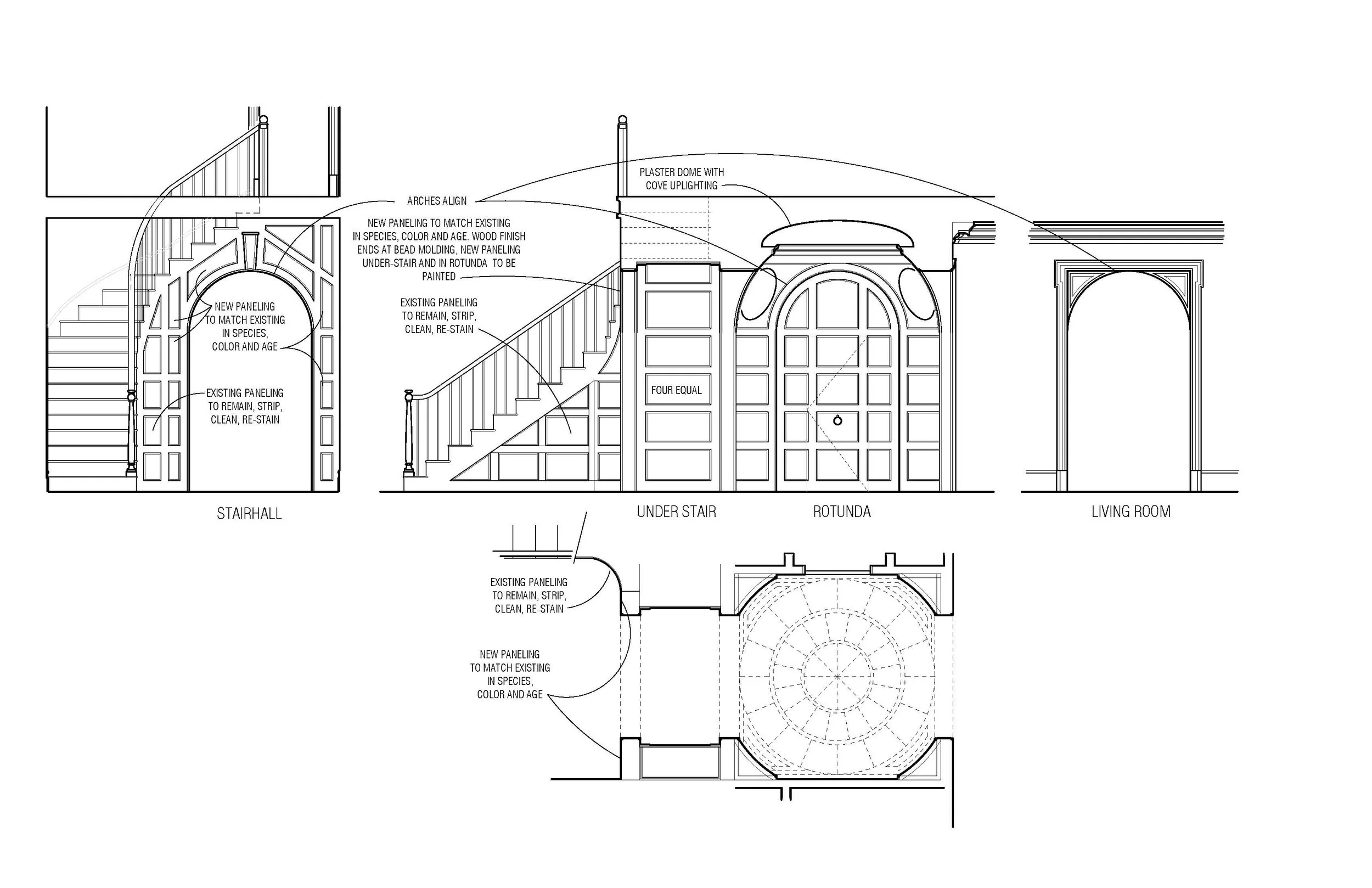
The opportunity came in a project to renovate and update a 19th-century Greek Revival house. The transition space under a stair leading from a tall entry hall into a large living room was an open canvas. Why not fill it with drama? I pulled the image from my mind, sketched it out, and adapted it to the space.
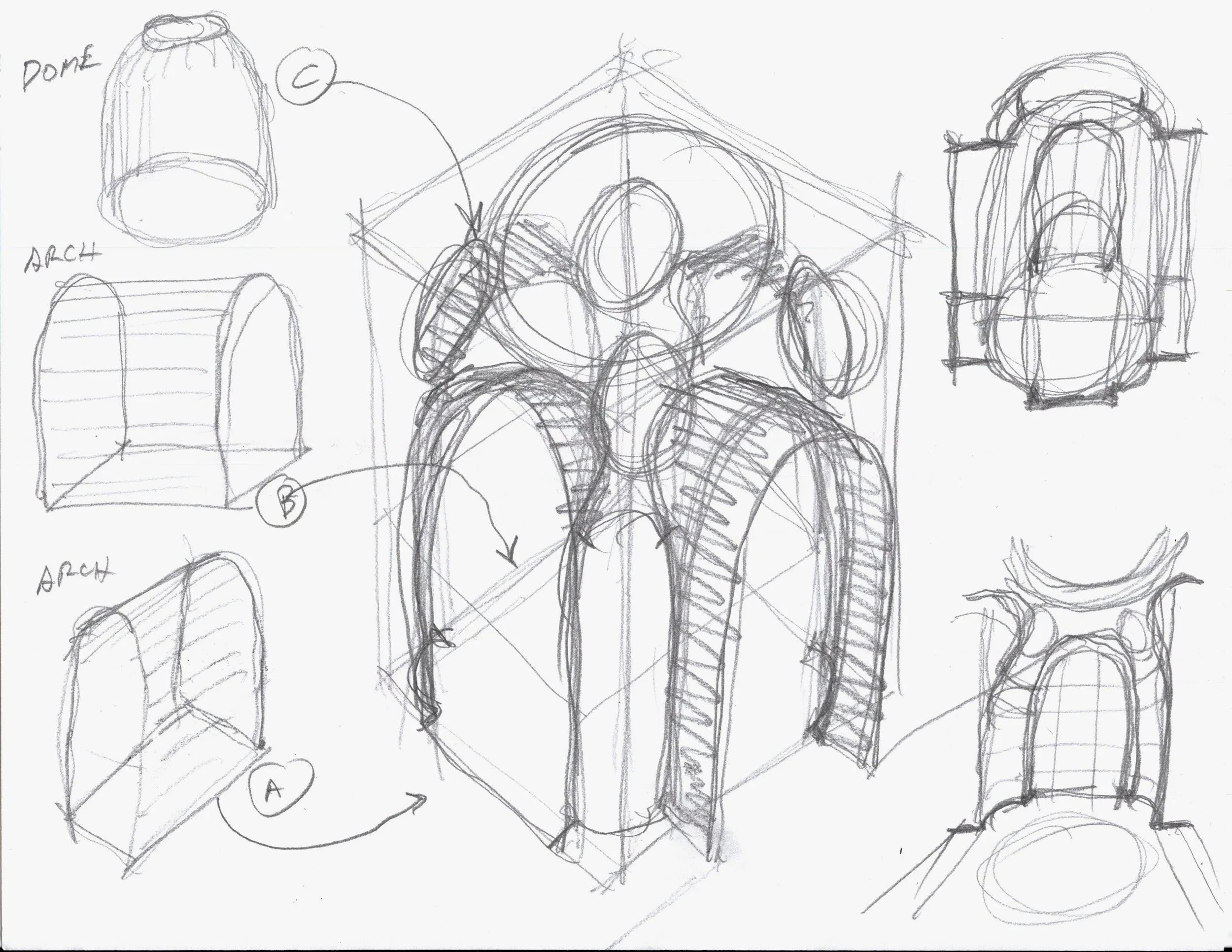
It was the traveling and the memory that made it possible. Travel is an essential tool for an architect to develop the tools of the trade.